Jimmy Butler shares update on ACL recovery, future with the Warriors
By Jorge Perez· Founder, V12 DFS
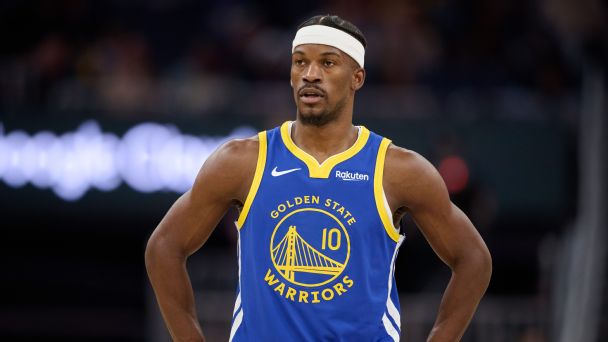
Availability is the first wall. Projection and ownership only matter after OUT, questionable, and replacement-role risk are resolved.
Jimmy Butler's ACL tear on January 19th removes a tier-one usage anchor from the Warriors' lineup, and that reshapes both game-level pace projections and individual role expansion for the next several months. The DFS read hinges on availability: Butler was drawing starter minutes and high offensive load before the injury, so his absence forces a minutes re-allocation among Golden State's wings and guards. For slate construction, this means fewer total possessions available to Warriors guards and wings relative to pre-injury models, and the optimizer will adjust pace assumptions downward until Butler's return date firms up.
The Warriors' backcourt and forward rotation now compresses into a tighter player pool. Andrew Wiggins, Jonathan Kuminga, and Moses Moody inherit usage that Butler vacated, but that added volume doesn't create a direct 1:1 pivot—each player's ceiling and consistency floor shift based on matchup, rest, and whether Steph Curry's own usage climbs to compensate. Ownership leverage tilts toward contrarian fades of Golden State depth pieces if the slate assumes rapid role stabilization; in reality, Butler's absence creates volatility in role distribution week-to-week, which an nba dfs optimizer will flag as reduced projection confidence rather than a simple upside unlock.
For DFS purposes, monitor Butler's return timeline closely as a late-swap signal. A confirmed return date—even weeks out—sets a hard reset on Warriors lineup construction. Until then, Warriors salary relief (the cap space freed by his absence) doesn't directly benefit the active roster on any given slate, so don't over-leverage depth players expecting a sudden role crystallization. Verify minutes and DVP matchups for each night's Warriors opponent before locking.
Turn this NBA news into a lineup tonight
V12's NBA engine reads slate context, builds a candidate pool, runs configured simulations, ranks the portfolio with ownership and behavioral pattern signals, and ships a FanDuel-ready CSV. The news above becomes one input among many — not a forced lineup change.