Fantasy Baseball Hitter Waiver Wire: Using advanced stats to exploit the best matchups in Week 11
By Jorge Perez· Founder, V12 DFS
Availability is the first wall. Projection and ownership only matter after OUT, questionable, and replacement-role risk are resolved.
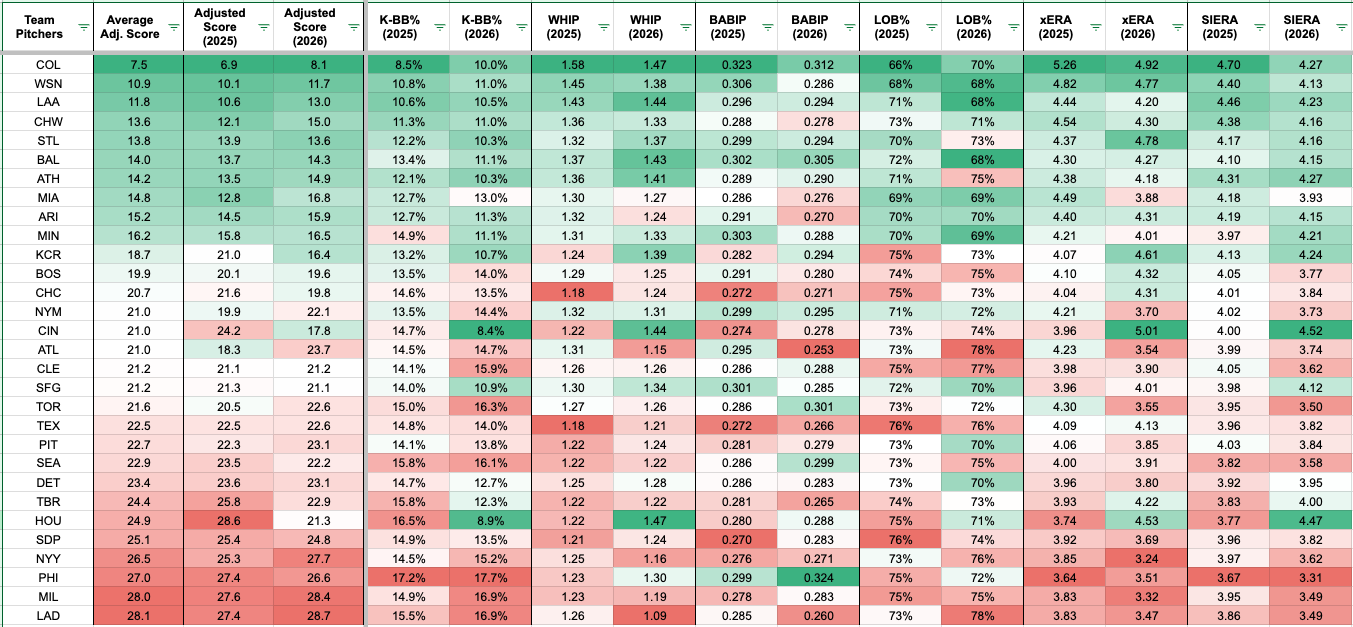
Matchup exploitation is the foundation of daily fantasy baseball edge, and the Waiver Wire read here underscores a principle that shapes how the optimizer ranks hitters week to week: opposing pitcher quality, park factors, and recent platoon splits matter more than name value. When an analyst leans on advanced stats to surface streaming candidates—hitters typically available in a given slate's player pool—they're identifying situations where projection inflation meets low ownership. The DFS angle isn't about season-long roster moves; it's about recognizing which plate appearances are likely to yield above-expectation results, which directly influences how the optimizer scores salary allocation and stack construction on a nightly or weekly basis.
Corbin Young's approach of matching hitters to exploitable pitching matchups aligns with how sharps build leverage in cash and GPP lineups. If the advanced stat read surfaces a third-order hitter catching a pitcher with a poor BABIP-against or velocity decline, that's a low-ownership pivot in a slate where ownership typically clusters around home run upside and recent hot streaks. The optimizer processes pitching matchup data as a core input to batting order position, handed-ness splits, and park leverage—meaning if the Waiver Wire analysis identifies a specific hitter-pitcher pair that the broader fantasy community hasn't priced in yet, there's potential for contrarian exposure before lock. Verification on the slate CSV export (comparing opponent arm-side, rest days, and recent platoon results) confirms whether the matchup advantage translates to actual projection lift.
A v12 user reading this kind of analysis should cross-check the specific hitters and pitching matchups mentioned against the day's ownership distribution and implied totals. If Young flags a hitter in a 9+ run game as a fade—because the opposing ace is in peak form, say—that's a ceiling risk to sidestep in cash, even if salary creates temptation. Conversely, if an overlooked bat lines up in a plus matchup in a lower-visibility game, that's a late-swap candidate worth confirming in the optimizer before your final lock. The key is treating matchup-based analysis as a signal to re-examine projected upside, not a direct buy or sell.
Turn this MLB news into a lineup tonight
V12's MLB engine reads slate context, builds a candidate pool, runs configured simulations, ranks the portfolio with ownership and behavioral pattern signals, and ships a FanDuel-ready CSV. The news above becomes one input among many — not a forced lineup change.