Mitchell Robinson: Playoff injury was reaction to family incident
By Jorge Perez· Founder, V12 DFS
Availability is the first wall. Projection and ownership only matter after OUT, questionable, and replacement-role risk are resolved.
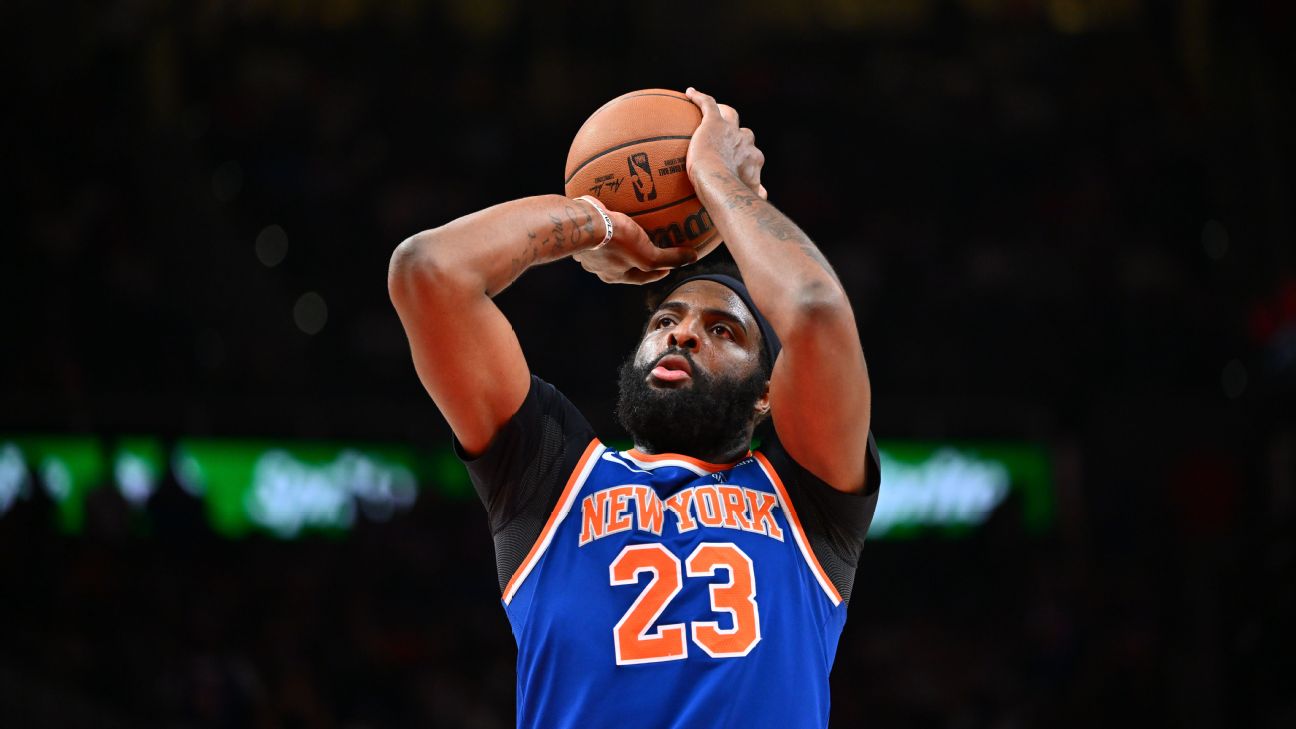
Mitchell Robinson's sudden hand injury during the Knicks' playoff run raised immediate questions about his availability for the Finals, but the newly acquired Celtics center has since clarified the incident as unrelated to on-court contact. Robinson explained the injury stemmed from a reaction to a family member's car crash, adding context that reshapes how DFS players and analysts should assess his recovery timeline and role certainty. For tournament lineups and cash games alike, this distinction matters: an injury born from off-court trauma carries different rehab uncertainty than a typical basketball-related ailment, and Robinson's pain tolerance or medical clearance may not follow the standard progression.
The injury timeline becomes critical for slate construction. Robinson was a centerpiece of Knicks lineups before the Finals, and his minute load and offensive role in Boston's rotation are not yet locked in. If Robinson's hand heals faster than feared—or if the Celtics manage his minutes cautiously to avoid re-injury—his ceiling and floor shift dramatically. The optimizer would treat him as a high-variance play until confirmation arrives closer to tip-off, especially if the Celtics publicly commit to his workload. In the meantime, Celtics cash-game centers and Knicks stack pivots hinge on Robinson's practice participation and any in-game late-swap opportunities.
For DFS users building on Celtics or Knicks slates, Robinson's status remains a watch-and-verify situation. Monitor shootaround reports, official team communications, and any indication that Boston plans a minutes restriction or precautionary benching. If Robinson plays at full capacity, his ownership will reset based on the Finals spotlight; if he's limited, exposure shifts to backup centers and complementary role players. Ownership leverage often hinges on narrative injury news like this—the casual public may fade him out of caution, while sharp players with confirmed game-day participation data can exploit undervaluation.
Turn this NBA news into a lineup tonight
V12's NBA engine reads slate context, builds a candidate pool, runs configured simulations, ranks the portfolio with ownership and behavioral pattern signals, and ships a FanDuel-ready CSV. The news above becomes one input among many — not a forced lineup change.